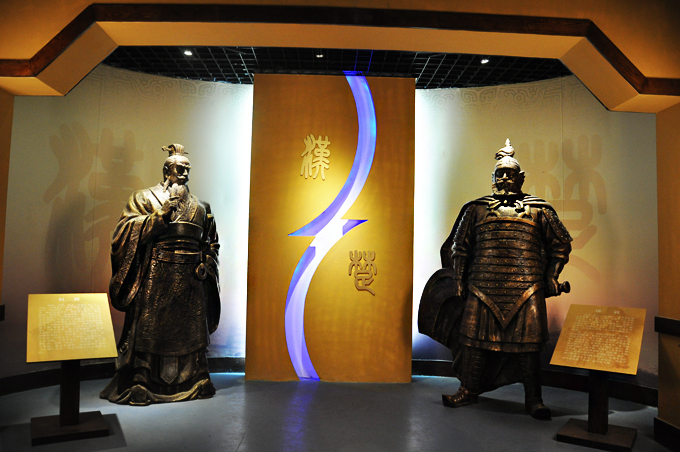
Liu Bang
Introduction
Liu Bang (256 or 247 BC – June 1, 195 BC), also known by his temple name Gaozu, was the founder and first emperor of the Han Dynasty(206 BC to AD 220). His rise to power marked the transition from the tumultuous era of the Qin Dynasty (221-206 BC) to a period of relative stability and prosperity under the Han. Born into a peasant family, Liu Bang's humble beginnings were a significant departure from the aristocratic norms of Chinese rulers, which contributed to his unique approach to leadership.
Early Life and Rise to Power
Liu Bang was born in Pei county, in present-day Jiangsu province. He worked as a minor local official under the Qin Dynasty, which was known for its harsh legalism and strict governance. Liu Bang’s dissatisfaction with the Qin regime and its oppressive policies led him to gather a group of followers and eventually rebel against the Qin.
In the chaos following the fall of the Qin Dynasty, Liu Bang emerged as a significant military and political leader. He was one of the few leaders who successfully challenged Xiang Yu, a powerful warlord of the time. Liu Bang's ability to win over various influential figures and consolidate power through strategic alliances was crucial to his success. His victory over Xiang Yu at the Battle of Gaixia in 202 BC was a decisive moment that led to the establishment of the Han Dynasty.
Establishment of the Han Dynasty
Upon establishing the Han Dynasty, Liu Bang adopted the title Emperor Gaozu. His reign marked the beginning of one of China's most influential dynasties, characterized by economic prosperity, cultural development, and political stability. Unlike his Qin predecessors, Liu Bang implemented a more lenient legal system and reduced the severity of punishments, which garnered him the support of the common people and the intellectual elite.
Liu Bang also reformed the administrative system, establishing a centralized bureaucracy that would become a model for future Chinese dynasties. He appointed capable officials, many of whom were recommended based on merit rather than noble birth, creating a more efficient and effective government.
Cultural and Economic Contributions
Under Liu Bang’s rule, the Han Dynasty saw significant advancements in agriculture, leading to an increase in food production and population growth. The promotion of Confucianism as the state philosophy helped restore order and social harmony, contrasting with the legalist doctrines of the Qin Dynasty.
Liu Bang’s policies laid the foundation for the flourishing of Chinese culture, including developments in literature, music, and the arts. The introduction of the imperial examination system, although fully developed later, began to take shape during this period, emphasizing the role of education and scholarly merit in governance.








